Serial Number Recognition and Analytics of Banknotes
Evaluation of use cases along the banknote life cycle
Central banks around the world are asking for technical concepts of banknote serial number recognition and analytics in the cash cycle. This raises the question of which goals are to be achieved for the respective use cases, including the transportation of the serial number applications defined for the purposes of printers to a serial number for the banknote life cycle.
The National Central Banks' answer to the question of their project purpose for serial number recognition and analytics remain rather vague. This article provides an initial overview of the subject.
Serial number on banknotes in printing process
The serial number of a banknote serves as a unique identifier for distinguishing each individual banknote in a series from others, even if they have the same denomination and come from the same printing plant, and more advanced come from the same production batch. The serial number is therefore the unique fingerprint of a banknote.
The serial numbers on banknotes are currently designed for the purpose to ensure process control during the production and enable later a back tracing for quality assurance in printing plants. The mainly alphanumeric format of serial numbers may include encoded information about the denomination and series, the issuing central bank, the factory, and the year of production, etc. Modern designs of serial numbers contain in addition algorithms that are integrated as check digits to enable a control function during subsequent reading.
Serial numbers are printed conventionally using the letterpress method; the new inkjet technology has not yet become established in serial number printing for banknotes.
The numbering machines in the printing plants are one of the last steps in the printing process. The serial numbers are printed in sequentially order but in one run for the entire banknote sheet. The numbering systems are mounted on rotating cylinders where number and letter wheels can operate 80’000 revolutions per minute, enabling up to 12’000 sheets per hour. The challenge is that for each rotation, the numbering system needs to set a new security code before inking. Modern systems must be failsafe which can be archived with algorithms that minimize the number of moving parts.
Inks with integrated security features in the form of UV, infrared and magnetic hard metal particles are mainly used to print serial numbers on banknotes. The numbers are embossed into the paper surface in such a way that they cannot be removed and are wear resistant.
The overall printing process is controlled by camera inspection of the numbers, seals and signatures on individual banknotes and the entire printed sheet. All data is recorded, also for the possibility of back tracing at a later stage. The serial number on banknotes with the corresponding numbering scheme for each printed sheet determines the banknote position on the sheet and the sheet sequence. Defective sheets are automatically detected and sorted out; error statistics are generated based on the sheet position and supports a post-production reconciliation process.
High-speed banknote processing systems with single note inspection ensure a final quality check of each banknote after the sheets have been cut and are equipped with automatic packaging in bundles and further in cash boxes. The sensors of the high-speed processing systems allow the data capturing and recording of the serial number in a central data base.
The result is that the serial number on a banknote enables a basic check for authenticity and tracing during production and in circulation. The additional rule settings and security features in the serial number make it even more difficult for counterfeiters to produce large quantities of counterfeit banknotes without being detected. The serial number plays therefore an essential role in the integrity of the currency as legal tender.
Automated serial number reading beyond the printing process depends on the sensor in the processing machines
The question arises whether serial number reading can be used as a reliable method to provide banknote specific data for further analytics. This depends primarily on the sensor technology in use and its reliability to provide stable data for further data evaluation.
Manufacturers offer various sensors and modules for the automated banknote authentication and processing in systems installed in cash centers, or sensor modules for deposit and recycling devices in ATMs or integrated in payment systems installed in retail PoS or back office. The installed sensor module differs in terms of processing speed, resolution and reliability for data capturing and recording. The image of the banknote and its serial number must be analyzed in step two by a signal processing unit with optical character recognition (OCR). Such OCR technology interprets the alphanumeric characters of each serial number using high-resolution images and algorithms based on patterns by converting the letters and numbers into machine-coded texts of the scanned banknotes.
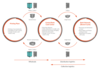
Functionalities of banknote sensors
The quality of sensor type and signal processing unit are decisive for the individual use case in mind, because a 99.99% accuracy in serial number reading can be low. In cash centers with a processing throughput of 1’000’000 banknotes per shift, 100 notes cannot be identified correctly; at a cash recycling ATM with a sensor of 99.8% accuracy, 40 notes per month are not read correctly for a cash-in volume of 240’000 notes p.a.
A poor banknote quality worsens these figures if soiled and damaged banknotes must be processed in day-to-day operations outside of the printing plants. All these factors increase the reject rate of banknote processing systems with manual reconciliation, but also the overall rate of serial number misreading. Such factors severely limit the use cases that rely on a hundred percent error-free reading.
Use cases must be equipped with suitable technologies
The sense and purpose of a use case determines which technology must be installed to achieve its objectives. On the other hand, the installed technology in the field limits the deployment of the use cases.
Use cases for serial number recognition are mandatory in printing plants, further approaches can be found in cash centers of National Central Banks (NCB), police and prosecution authorities, and in commercial banks and other professional cash handlers who are involved in the cash cycle. In most cases, the aim is to track and trace the unique banknote and its features along the cash cycle. The movement of a banknote can be traced as soon as at least two persons, or cash points with banknote processing capabilities have recorded its data together with the time and location.
The purpose can be different, e.g. at NCBs for inventory management with tracking of banknotes over their entire life cycle, and at law enforcement agencies for fraud protection by the detection of counterfeiting, financial crime or money laundering. Hence, such serial number recognition, recording and analytics can support the public and the commercial sector.
Classification of use cases
Use case for criminal investigation
The integrity of the currency in circulation can be supported by reading and analysis of serial numbers on banknotes as they serve as unique identifier that can be traced back to its origin.
Counterfeit banknotes should therefore be stopped from entering the cash cycle. When a counterfeit banknote is detected in a bank branch, or in ATMs, the suspect banknote including the serial number must be recorded and connected to the depositor. A similar process can be installed for cash-out processes at ATMs, if the banknote serial numbers are recorded during ATM cassettes filling to prevent fraud if the “client” later claims to have received a counterfeit from the ATM and demands compensation from the bank. The banknotes in the ATM cassettes can also be traced back to the criminal organizations by the law enforcement authorities via the serial numbers in the event of ATM attacks.
Depending on the structure and content of the serial number, in future data intelligence and algorithms can be used to generate further analyses that lead to a more efficient strategy for fighting crime. Probability models enable calculations, where deviations in the standard distribution of banknote serial numbers in a region can indicate criminal events, such as commercial money laundering in the retail sector. Of course, this also means that the regular retail deposits must be processed in the cash center with machines equipped with serial number reading, same is applicable to ATMs if the depositor uses this banking channel. Pilot applications show that such measures have the potential to support law enforcement authorities, also if such processes do not request a 100% recording of the banknote numbers. However, a nationwide introduction of serial number recognition refers to an overall cash strategy, since this possibility is linked also to banknote design including the serial numbers and is not only based on the opportunity of serial number capturing and analytics at a later stage.
There are many more sub-categories of these use cases, all based on the same principle of criminal investigation, i.e. the phenomenon of composite banknotes can be identified by reading the serial number on both sides of the banknote.
Use case for National Central Banks
The Central Banks monitor the banknotes in circulation and record the issue and lodgment volumes per denomination. They could link the fresh banknotes with the serial number when they receive the shipments on basis of carton and of bundle from the printing plants before issuing (positive list). In theory, this can also happen in reverse at NCB level, when the banknotes are withdrawn from circulation and destroyed because they are unfit (negative list). The use case is limited if not all banknotes run through a banknote processing system with online shredding and 100% serial number recognition, because the banknote quality is poor at the end of the life cycle. Therefore, a large number of NCBs around the world do not even record the serial numbers on banknotes when issuing into circulation. And many others safe costs by only randomly checking and processing the small denominations before destroying the complete bundles directly in offline shredders.
The technique in conjunction with the operational processes limit the idea of a complete list which banknote is exactly in circulation. The economic arguments outweigh, especially when the manual processing of reject notes on the processing machines must also be taken into account.
Analyses of the destruction rate as a function of the production batch can support test trails, allowing conclusions about the substrate, security features, and ink based on and in relation to serial numbers. Measuring the velocity of banknotes between regions can also only be supported in pilot projects, but not in day-to-day operation.
Use case for commercial sector
Commercial cash center operators, such as cash-in-transit companies (CiT), are not permitted to carry out so-called cash pooling of different customer funds when processing banknotes if they do not have a license as a financial service provider. CiT companies usually do not have such a license. They must process the deposits for each bank separately, which leads to inefficiencies in cash processing, lower capacity utilization (OEE of banknote processing systems) and therefore higher costs.
If the allocation of a banknote to a deposit can be clearly assigned to the customer's origin by recording the banknote serial number, CiTs could also be allowed to pool deposits across banks during banknote processing without applying for a financial service provider license. However, this procedure requires the highest level of accuracy in serial number recording and analytics, otherwise the results of the deposit reconciliation will be called into question. The procedure is not confirmed by the current field tests and therefore not be approved by the banks.
Conclusions
Each party which is watching out to use cases based on serial number recognition is confronted with the limits of the existing processes and currently installed technique in order to achieve a positive and efficient result. For Central Banks, serial number reading requires high-speed banknote processing systems with a high-quality image sensor enabling a high-resolution, and fast and reliable image capturing. OCR is then fully integrated in the system with a real-time, high-accuracy OCR and with an AI-based correction. Such a high-speed banknote image processing by 30 banknotes per second goes in line with massive data handling. The capability of data storage and management depends heavily on processor capacity and requires a robust data management system. There is usually a trade-off between speed and accuracy, and the integration of the system with other modules can be challenging.
The commercial sector has additionally the need to upgrade the current processing systems in order to achieve the required process accuracy and financial benefits for them through serial number recognition. Error rates in day-to-day operations can increase due to poor banknote quality, varying fronts, and complex backgrounds, leading to reduced benefits of use cases which requires high accuracy at each cash point along the cash cycle.
The initiators should define the sense and purpose of the program and evaluate the technical and procedural implications. This means that the Central Banks must evaluate if the defined target can be solved by introduction of serial number recognition and analytics only, or by other methods in a more efficient and reliable way. In this context, the technique must also be economically viable for the public and the commercial players – otherwise the cost of cash is negatively impacted.
In the discourse, we need to distinguish between the sovereign tasks within the public sector. Several use cases fall within the scope of law enforcement and crime prevention authorities and are therefore primarily the responsibility of the Ministry of the Interior and the police authorities. It is the souverain task of the Central Banks to protect the integrity of the national currency. As part of its remit and with the direct access to the physical banknote in NCBs’ cash centers, the Central Bank provides a valuable preliminary service to support the investigating authorities in connection with banknote crime and money laundering.
Sources: Authentix Inc, Bundesdruckerei Gruppe GmbH, CI Tech Sensors AG, European Central Bank, Europol, Elephant & Castle IP GmbH, Giesecke + Devrient Currency Technology GmbH, Glory Global Solutions Ltd.
Banknote examples with various serial number philosophies.